
 look book

latest
habitat tv

Say goodbye to the morning scramble for keys, coats and sunglasses and hello to this… see this and more videos
blog
Reader roundup: Public murals and powder blues
A Morningside mural, an exterior refresh, and striped walls. Let these projects be your inspiration… more
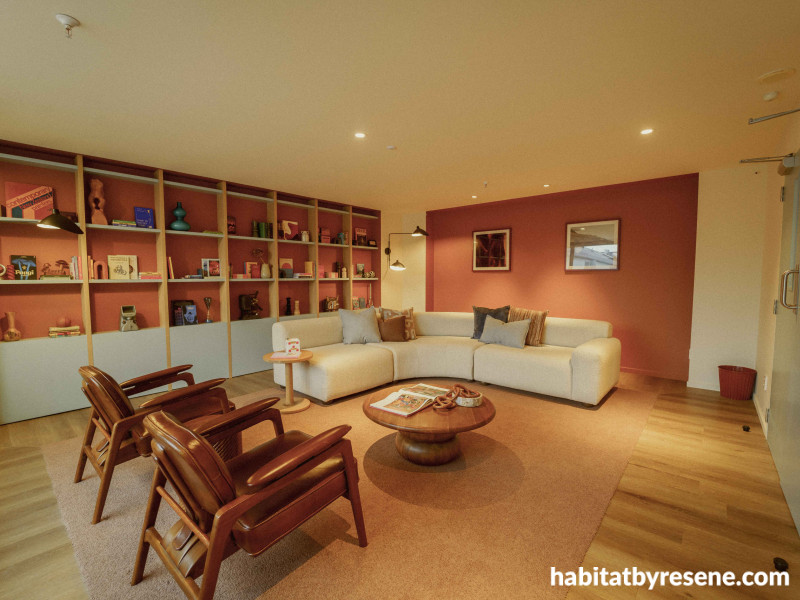
The library is part of the social spaces of Drifter Hotel Christchurch and features Resene Mellow Yellow, Yucca and Scoria.
The new standard in hospitality
11 May 2026
There’s no denying that the hospitality landscape has undergone a major change in recent years with a general shift in travelers’ habits and the emergence of ‘digital nomads’.
With greater flexibility for work than ever before, ‘hybrid working’ has become a defining feature of modern workplace culture with employers offering adaptable models including co-working and even remote working, which has resulted in a new kind of hybrid – hybrid hotels.
Hybrid hotels – such as the Drifter Hotel Christchurch – blend ‘traditional’ hotel services with the community feel of hostel-style accommodations. Facilities tend to include co-working spaces, shared lounges, and bars designed for both guests and locals. They also offer long-stay options targeting the aforementioned digital nomads or business travelers.
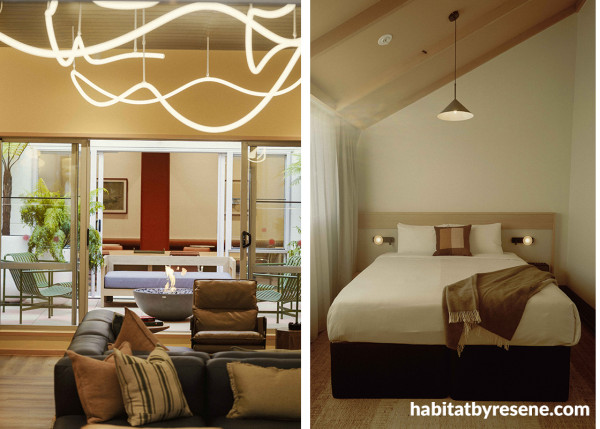
The social spaces, for the most part, have been given a vibrant treatment through the use of colour – such as Resene Golden Sand – and materials. This is in contrast to the bedrooms, such as the private suite above, which has a more relaxed feel and features Carrara and Calibre.
“Our studio got involved through a pitch for 'Drifter,' which at the time was a completely new brand created by a group of Australian entrepreneurs,” says Tim Voss, CTRL Space Senior Project Designer.
“We were immediately drawn to their desire to reinvent the idea of what a hostel could be: something vibrant yet centred on the shared experience of staying in a regenerating city. They described a real excitement for Christchurch’s reinvention and the 'new wave' of culture permeating the city, and we wanted to be part of that.”
Central to the Drifter ethos is the renovation and re-habitation of existing properties to create unique and city-specific experiences. In Christchurch that meant the former Wellington Woollen Manufacturing Company building, designed by renowned architect William Henry Gummer in 1919.
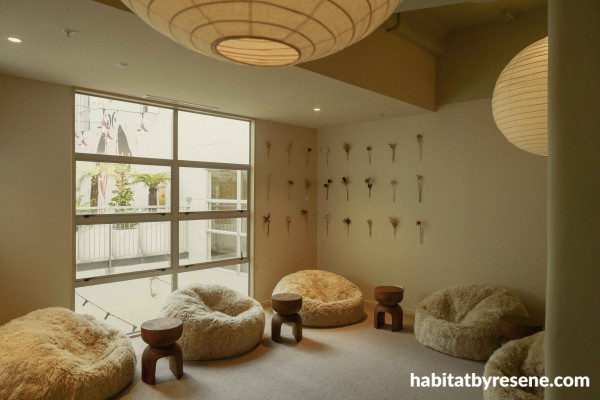
The Zen Room has been thoughtfully designed for calm and quiet and features Resene Mellow Yellow.
“The building, which holds the title for being Christchurch’s first reinforced concrete building, was a huge draw itself for us wanting to be involved in the project,” says Tim.
“It gave us a beautiful canvas to work with, from the stunning stone facade to the raw concrete columns and steel windows. Although the building has many new elements, such as seismic strengthening and modern cladding systems, we worked to ensure the building’s original character was felt throughout.
“We developed a narrative that bridged the guest, the brand, and the site’s history. We landed on a combination of the woollen manufacturing heritage, using natural fabrics and knitted textiles paired with industrial details, alongside the vibrant-yet-sophisticated aesthetic of the 1920s Bauhaus movement. This felt like a natural chronological fit for the architecture of the same era, allowing us to respect the building's heritage while introducing a modern, energetic edge through those key colours and clean lines.”
As well as developing a ‘look’ for the property, the team also reworked the layout to create a more cohesive, communal feel.
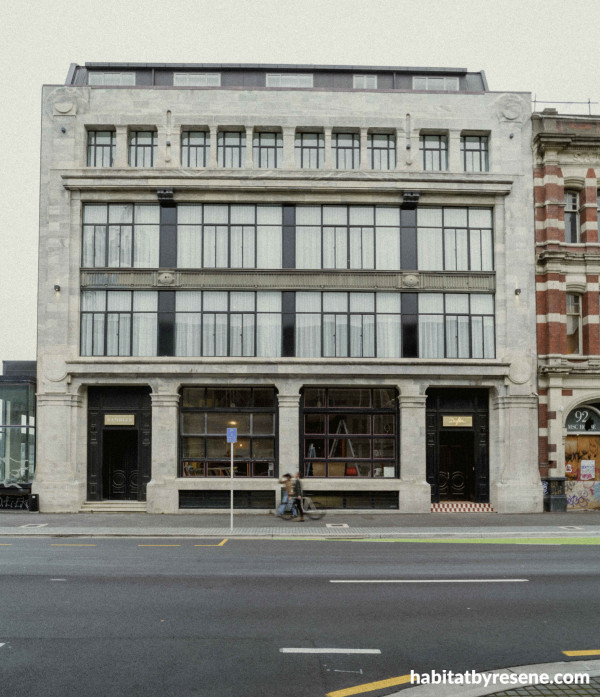
The Drifter Hotel in Christchurch is housed in the former Wellington Woollen Manufacturing Company building, designed by renowned architect William Henry Gummer in 1919.
“The building featured a large, internal lightwell with tiered balconies around the edges. We decided to centre all the common areas on this courtyard-style space, 'activating' the balconies with lighting, murals, planting and furniture – we even painted the existing pavers. Now, from each of the common areas you can see up, down and across the building.
“Beyond the upper floors, we wanted the bar and reception areas to feel fully connected, as the bar and reception are essentially one space, encouraging the hotel guests to feel a sense of ownership over the social spaces, while still making the public feel welcome.”
As well as a base of Bauhaus colours, the team developed a complementary palette of soothing neutrals and accents – incorporating Resene Calibre, Carrara and Solitaire – for the various room types.
“Resene offered a great range of colours that worked perfectly with the Bauhaus scheme, specifically those muted primaries and soft neutrals we were after,” says Tim.
“For wayfinding, we used Resene Scoria, a vibrant burgundy, on doors into common spaces to contrast the clean neutrals of the corridors. Within the guest amenity spaces, we gave each room a unique colour story to link the atmosphere of the space to the overall brand concept.”
Drifter Hotels are in the planning for Auckland and Wellington continuing the brand’s presence in New Zealand, as well as its relationship with the CTRL Space team.
Photography by: Ain Raadik
Published: 11 May 2026